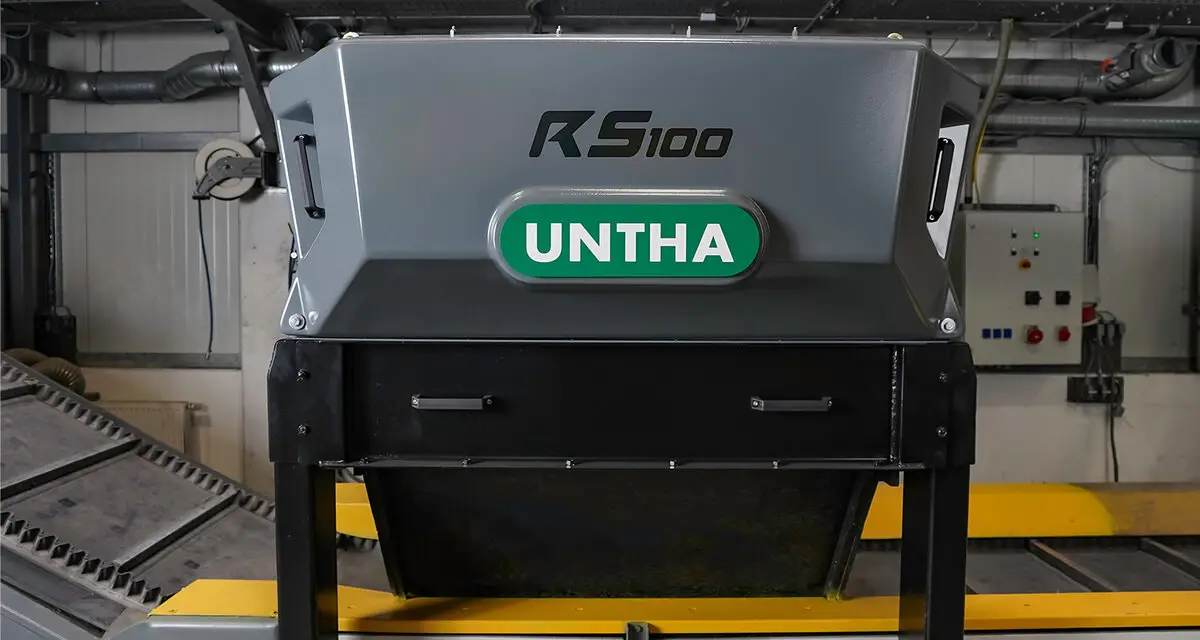
UNTHA RS50/RS60/RS100
Modular four-shaft industrial shredder for WEEE, metals, plastics, hazardous waste and demanding recycling.
Key features
- Modular configuration – speeds, cutters, screen openings and seals individually tailored
- 4th generation direct drive – fewer wear parts, lower maintenance costs
- Quick-change screen system – up to 30% faster screen changes
- Built for multi-shift continuous operation
- Resistant to foreign objects – automatic stop on contact
- Technology package available with mechanical seals, wear plates and digital oil level monitoring
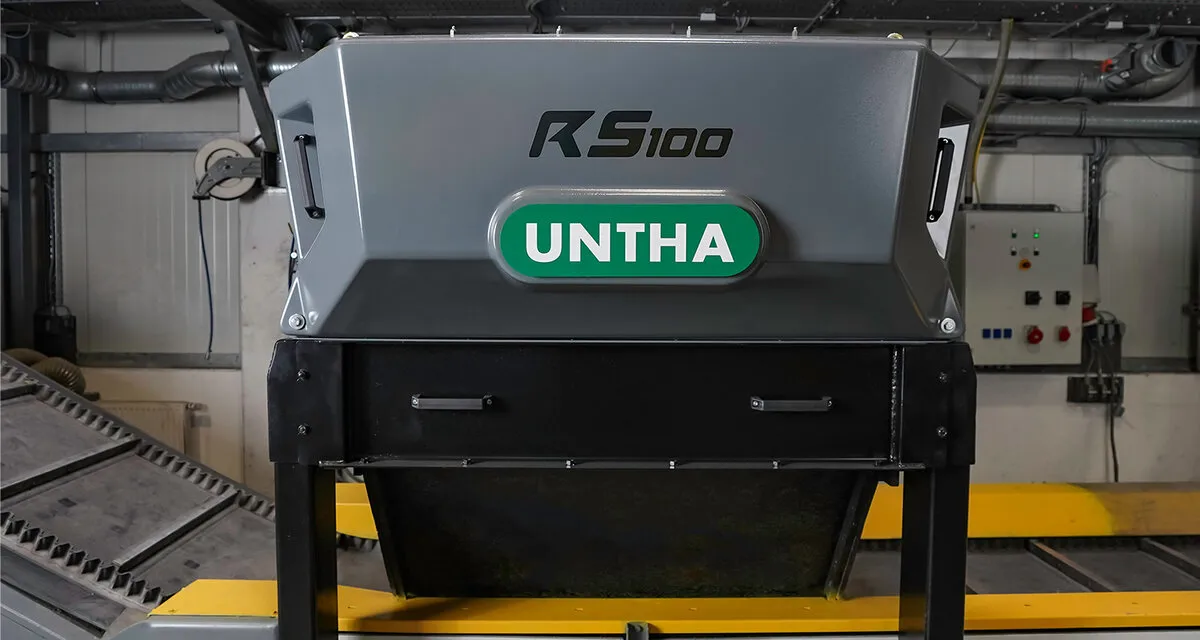
UNTHA RS50/RS60/RS100 – industrial shredder for demanding materials
The RS series from UNTHA is a range of medium to large four-shaft industrial shredders developed for demanding recycling tasks. With four rotating shafts and a robust cutting mechanism, the machines handle a wide spectrum of materials – from electronic waste and metals to hazardous and medical waste – delivering uniform granulate with precise particle size. The series is an established choice in professional waste management, with over 5,000 RS machines installed worldwide.
A key feature of the RS series is the modular concept. Rotational speed, torque, cutter spacing, screen opening and seal type can all be individually configured, allowing the machine to be matched precisely to the material and throughput target for each operation. This makes it possible to optimise the machine for everything from high volume capacity to very precise particle size, without having to accept standard compromises.
The fourth generation of the RS series was launched at IFAT 2024 and introduces direct drive that eliminates couplings and gearboxes, reduces the number of wear parts and notably lowers maintenance costs. The generation also introduces an integrated quick-change screen system that delivers up to 30% faster screen changes, as well as an improved cutting mechanism that extends cutting tool life. The machines are engineered for continuous multi-shift operation and stop automatically on contact with foreign objects to protect the cutting mechanism.
Variants
- RS50 – cutting chamber 750 × 700 mm, 44 kW, approx. 2,600–3,200 kg. Typical throughput 1.5–2 t/h for WEEE with 25 mm screen.
- RS60 – cutting chamber 960–1,440 mm, 50–74 kW, approx. 4,000–5,300 kg. Screens available in the 15–100 mm range.
- RS100 – cutting chamber 1,200–1,500 mm, 100–150 kW, approx. 9,000–12,000 kg. Screens in the 30–100 mm range for high-capacity processing.
Applications
The RS series is suitable for a wide range of material types and industries:
- WEEE and electronic waste (mobile phones, computers, white goods)
- Metals – copper, aluminium and ferrous metals
- PET bottles and rigid plastics
- Batteries and accumulators
- Hazardous waste and medical waste
- Paper, archives and confidential documents
- Tetra Pak and composite packaging
- Textiles and clothing
- Industrial waste and production residues
- Refrigerators and white goods
- Spring mattresses and bulky furniture

Interested in UNTHA RS50/RS60/RS100?
Fill in the form – Eirik will get back to you with pricing and delivery time.
Other models
 Single-shaft
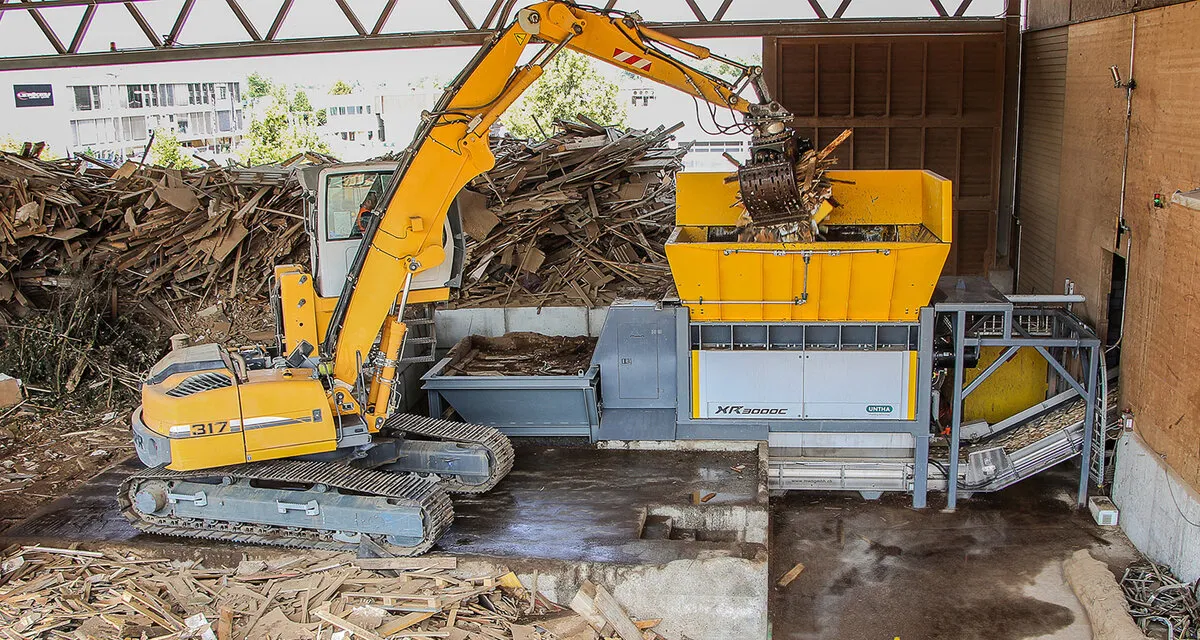
UNTHA XR
Electric single-shaft shredder for precise size reduction of waste and recyclables. The flagship of the UNTHA range.
Read more →UNTHA MR1800C Pro
Robust single-shaft primary shredder for demanding materials in single-stage operation. Launched by UNTHA in 2026.
Read more →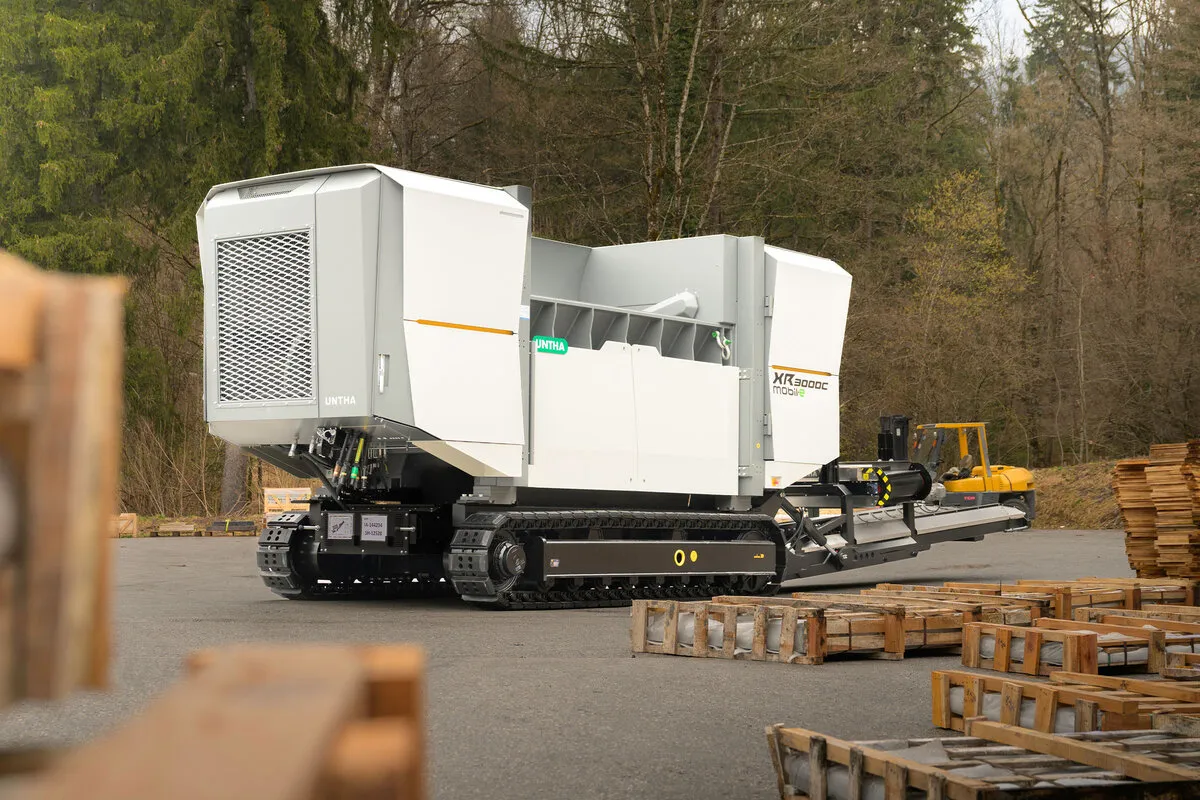 Enakslet
UNTHA XR Power Drive Edition
Enakslet kvern med remløs direktedrift og planetgir. Kostnadseffektiv XR-variant for høy gjennomstrømning og lavt vedlikehold.
Read more →Related articles
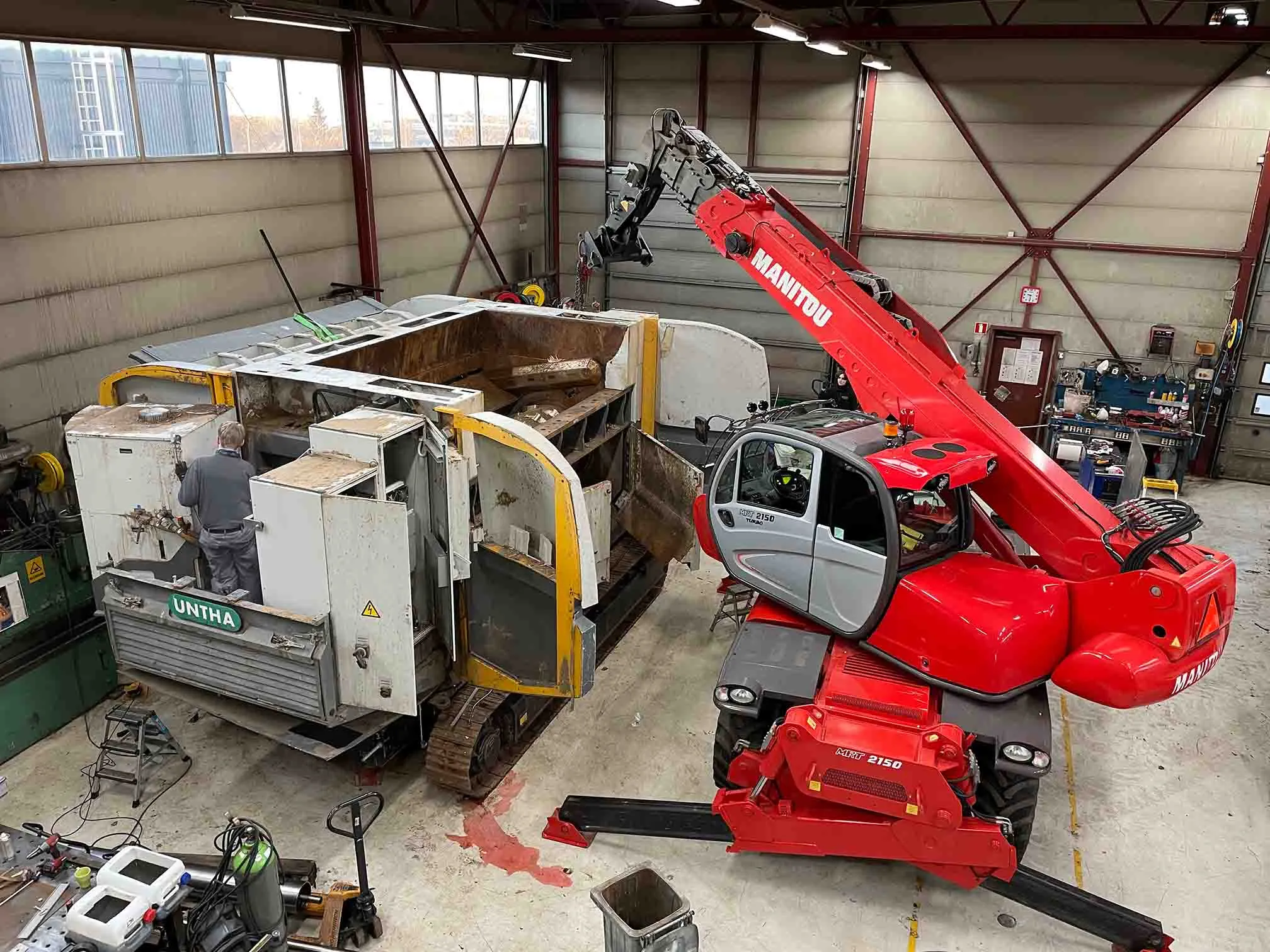
How to reduce downtime on mobile recycling machines
Preventive maintenance, correct spare parts, and clear operating routines deliver more uptime on equipment that is moved and exposed to dust.
Read more →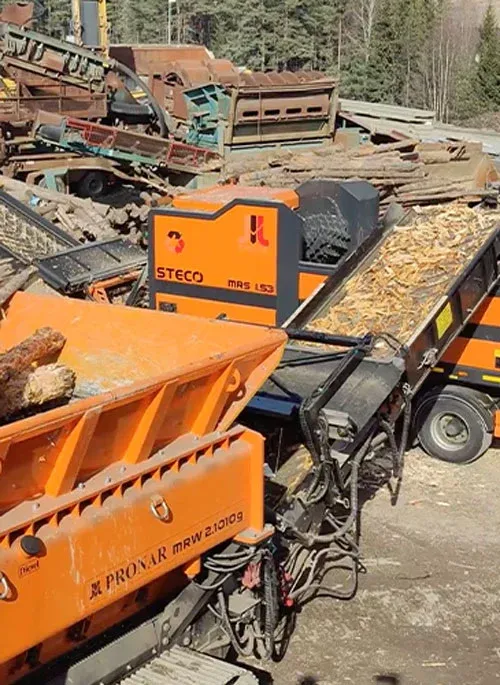
Mobile or stationary equipment: how to think total cost
Volume, setup time, and transport determine whether mobile recycling equipment or a fixed plant gives the lowest cost per tonne.
Read more →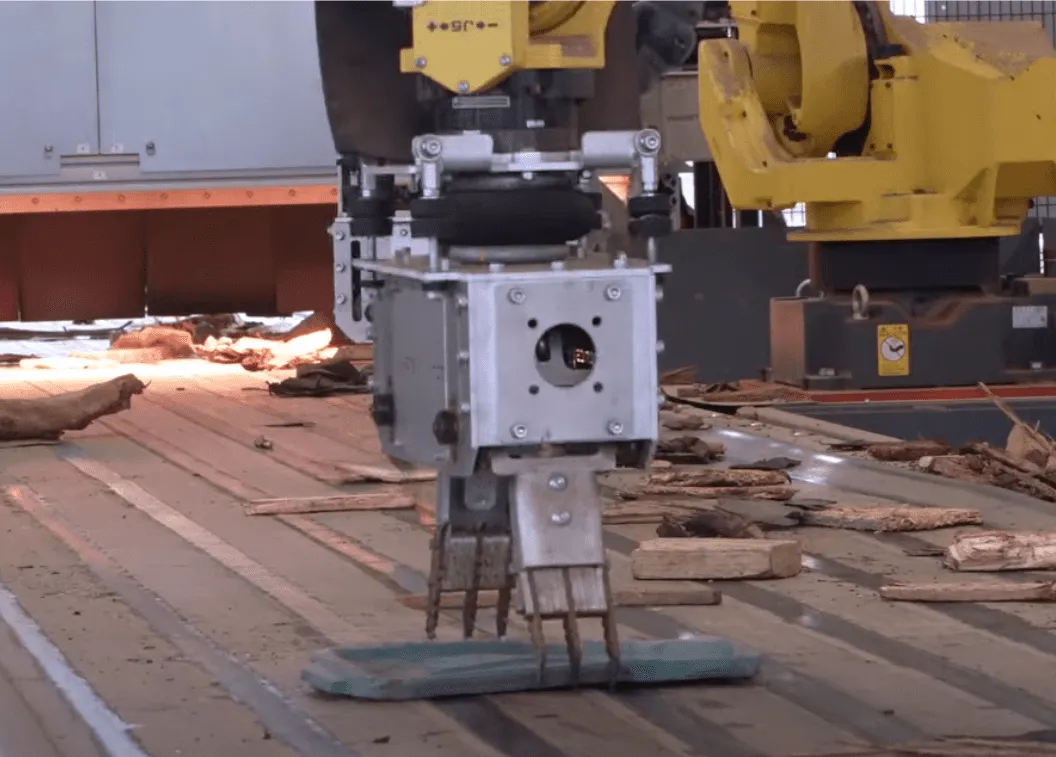
Manipulators for waste sorting – from robot arms to air jets
A review of different manipulator types that physically carry out sorting work in robotic waste sorting.
Read more →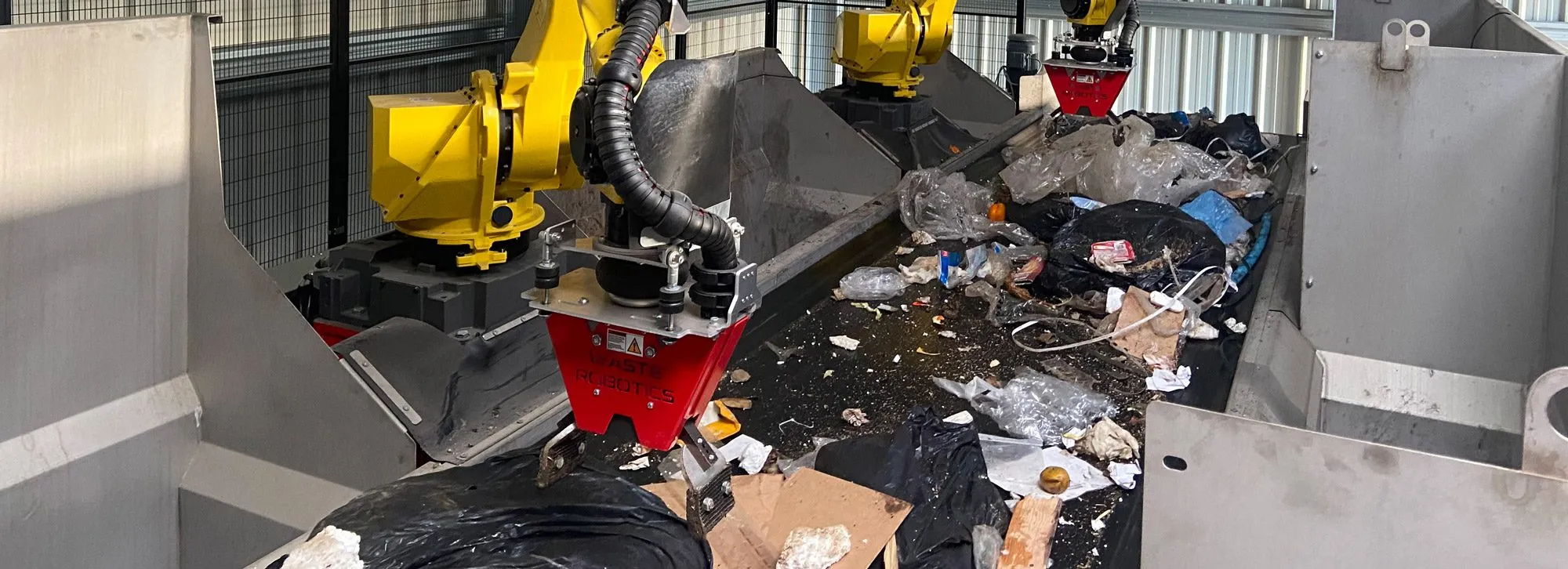
The interplay between detection and manipulation in waste robots
How waste robots depend on seamless coordination between detection systems and manipulators.
Read more →